
Introduction
Games are very common in life. Everyone loves to play games, especially children. Games are closely related to education, life and entertainment. Games are everywhere in life, and no one can deny the appeal of the game. This video was taken by me and my team members. Showing the theme of my blog with a 25 second video. This blog is mainly about how digital media and gamification and gamification can improve or influence motivation and engagement.
What is Gamification?
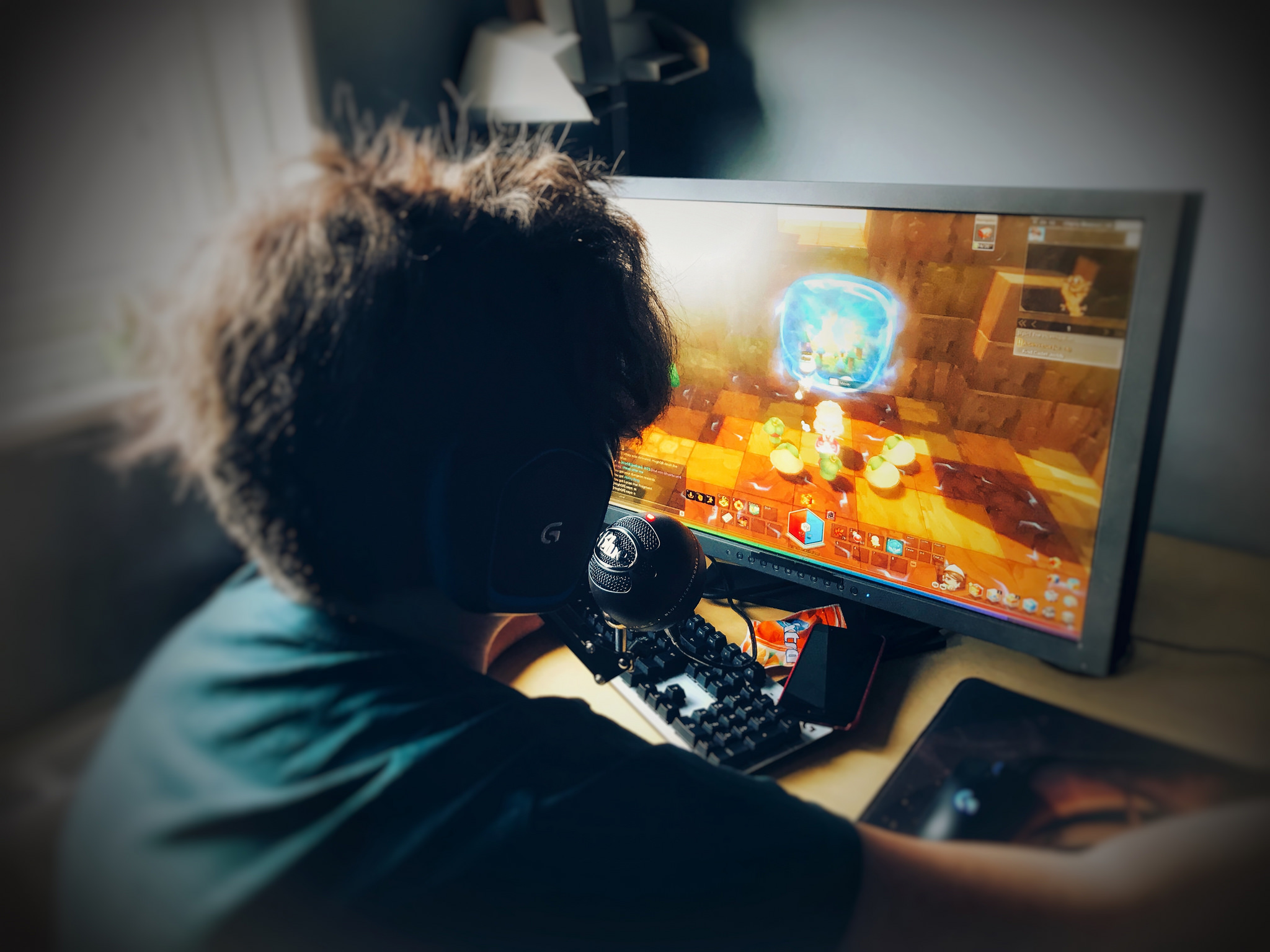
Games are a way of behavior that no one can refuse. The game stimulates some positive emotions of human beings, such as concentration, participation and sense of accomplishment. People become more engaged and productive in the game. Games can motivate individuals (Subhash & Cudney 2018) The purpose of gamification is to increase people’s enthusiasm and participation. Gamification can also be defined as the use of game design elements in non-gaming environments. Usually gamification is often used in education and marketing. Gaming applied to marketing and business environments to increase customer purchasing power. Its purpose is to attract more people and influence the consumer’s consumption behavior.
Gamification on Education
Gamification learning has been shown to improve student achievement and engagement and help them build more social connections than traditional course settings (Cheng-Chia et al.2018). Gamification is often used in the field of education. With the popularity of digital media, multimedia and online learning are widely used in education. The purpose of gamification is to attract students’ attention and interest in learning, thereby enhancing student participation and enthusiasm. In combination with the game and teaching, in order to increase the interest of the course, the teacher designed some small games related to the course to assist the teaching. Like Kahoot! Quizlet, Moodle Quiz, Educational Games, etc. These games make the course more interesting. It can also increase students’ interest in learning. Usually, these educational games will set up standings or leaderboards, encourage students to actively participate, and learn to get higher points or rankings. In addition, badge collection, points, feedback, and levels are the most commonly used game elements in game learning. According to research, the use of gamification learning can improve student engagement, motivation, confidence, attitude, perceived learning and performance(Van & Zaman 2018). A gamified educational model is easily accepted by students and increases student participation. In addition, research shows that gamification education is easier for students to acquire knowledge and enhance knowledge memory than traditional education. Gamification learning can promote students’ self-learning and help students improve their academic performance and participation. Gamification education can improve students’ motivation and engagement. In the future, more and more educational games appear in education.More online learning platforms use learning games to allow more students to learn on their own.

Coles tienda by erostrend(CC BY-SA 2.0)
Gamification on Business
Many companies apply gamification to employee training and employee performance appraisal. Employees’ enthusiasm is mobilized through punching, points, leaderboards or standings, allowing employees to actively learn and work. This enable the company to develop sustainably. This is a very good way to train employees. Employee loyalty is guaranteed through the ranking of points and game competition between employees. In addition, companies have applied gamification to sales and marketing. For example, Coles Supermarket launched a little shop promotion. It is stipulated that customers who purchase more than $30 will be exchanged for a product model with a shopping receipt. The product model is randomly distributed, and when all the product models are collected, the prize can be exchanged. The “Little Shop” collection includes miniature plastic replicas of Vegemite, Nutella, toothpaste, diapers and more. So, some fanatic collectors have joined the ranks of shopping. This has inspired people’s shopping needs. More and more people are increasing the number of shopping and the price of each purchase in order to get the Little Shop collection. This activity not only adds to the fun, but also promotes the purchasing power and desire of customers. In addition, some retailers also use electronic loyalty cards to exchange gifts or VIP member discount to promote customer spending. Even some companies use Augmented Reality technology to achieve gamification and customer interaction. Alibaba’s Alipay launched a campaign to scan the word “福”(Fu) in Chinese New Year. The word “福” (Fu) is a symbol of traditional Chinese festivals.Collect the “Fu” card by scanning the word “福” (Fu) and finally exchange the red envelope. This is interesting because the red envelopes are randomly assigned by the system. In order to increase the fun of the event and popularize financial knowledge, you can also get the “Fu” card by answering the questionnaire. The more you answer the correct question, the higher the score you get. In the end, you can draw a other prize in addition to the “Fu” card. Through this activity, more people are using Alipay this app. Gamification can attract more customers and increase customer loyalty and enthusiasm.
Gamification is not only a tool for learning work, it is also an important way to improve learning enthusiasm and participation. Gamification can also enable people to promote communication and competition. In the future, gamification will be applied in a variety of other fields.
References
Cheng-Chia (Brian) Chen1, ChingChih (Kathy) Huang1, Gribbins, M & Swan, K 2018, ‘Gamify Online Courses With Tools Built Into Your Learning Management System (LMS) to Enhance Self-Determined and Active Learning’, Online Learning, vol. 22, no. 3, pp. 41–54, retrieved 3 February 2019, <http://ezproxy.deakin.edu.au/login?url=http://search.ebscohost.com/login.aspx?direct=true&db=eue&AN=133022971&authtype=sso&custid=deakin&site=eds-live&scope=site>.
Subhash, S & Cudney, EA 2018., ‘Gamified learning in higher education: A systematic review of the literature’, Computers in Human Behavior, vol. 87, pp. 192–206, retrieved 3 February 2019, <http://ezproxy.deakin.edu.au/login?url=http://search.ebscohost.com/login.aspx?direct=true&db=edselc&AN=edselc.2-52.0-85049310341&authtype=sso&custid=deakin&site=eds-live&scope=site>.
van Roy, R & Zaman, B 2018., ‘Need-supporting gamification in education: An assessment of motivational effects over time’, COMPUTERS & EDUCATION, vol. 127, pp. 283–297, retrieved 3 February 2019, <http://ezproxy.deakin.edu.au/login?url=http://search.ebscohost.com/login.aspx?direct=true&db=edswsc&AN=000448635800020&authtype=sso&custid=deakin&site=eds-live&scope=site>.
Video Credits
A short Video to illustrate How does the gamification to enhance user motivation and engagement.
Video Camera: Victor
Video Maker: Victor
Music : Ho Hey By Steve Jackson (CC BY-SA 3.0)
References list
Cheng-Chia (Brian) Chen1, ChingChih (Kathy) Huang1, Gribbins, M & Swan, K 2018, ‘Gamify Online Courses With Tools Built Into Your Learning Management System (LMS) to Enhance Self-Determined and Active Learning’, Online Learning, vol. 22, no. 3, pp. 41–54, retrieved 3 February 2019, <http://ezproxy.deakin.edu.au/login?url=http://search.ebscohost.com/login.aspx?direct=true&db=eue&AN=133022971&authtype=sso&custid=deakin&site=eds-live&scope=site>.
Subhash, S & Cudney, EA 2018, ‘Gamified learning in higher education: A systematic review of the literature’, Computers in Human Behavior, vol. 87, pp. 192–206, retrieved 3 February 2019, <http://ezproxy.deakin.edu.au/login?url=http://search.ebscohost.com/login.aspx?direct=true&db=edselc&AN=edselc.2-52.0-85049310341&authtype=sso&custid=deakin&site=eds-live&scope=site>.
 The wonderful world of Victor