Social Media and Online Shopping

Background

With the popularity of social media, it is affecting people’s lives. According to a study by Zhang et al. (2017), in the United States, 30% of online time is spent on social networks and social media sites. Consumers are increasingly paying attention to social networks, usage is growing, and social media is becoming a new marketing platform. Social media users can generate content on their own, make comments, viral information spread (widespread, fast spread), so social media is a big challenge for marketers.


“Online Shopping Flat Illustration” by rizalul ammar is licensed under CC BY-NC-ND 4.0

The relationship between social media and online shopping

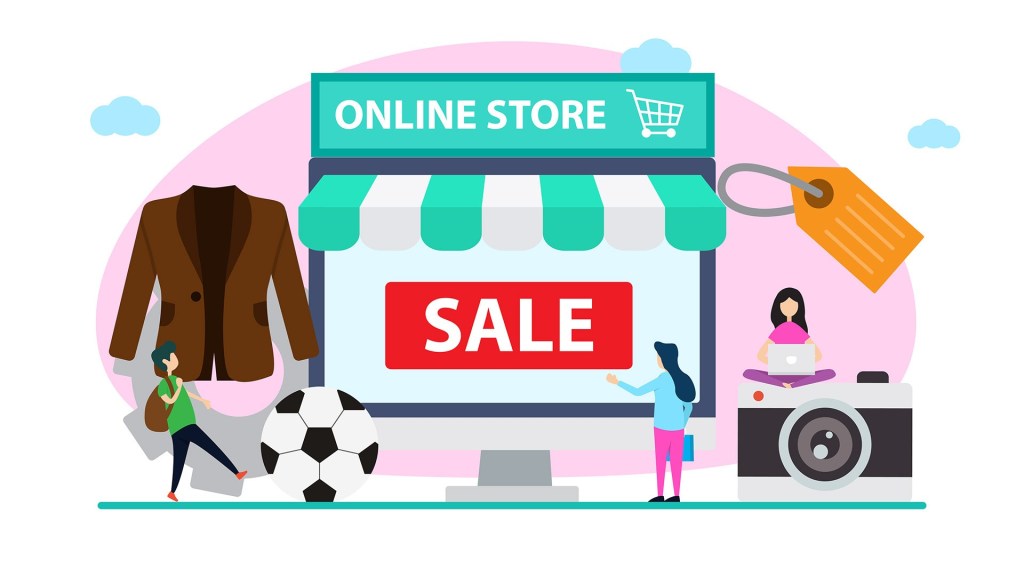
Social media can help retailers or brands better promote brands and products. Social media can have greater opportunities to reach customers and turn opportunities into buying rates (Gangai, et.al, 2018). Social media is positively related to purchases. People often have access to brand information and information about consumer activities on social media. Such as brand advertising, friends sharing the experience of recent shopping and reviews of products. People often share their buying experiences and information about the items they want on social media. These allow consumers to connect with merchants, and consumers can choose to shop through information on social media. Marketers can get consumer preferences through consumer feedback. Therefore, the combination of social media and online shopping constitutes a social shopping model (Zhang et.al, 2017).
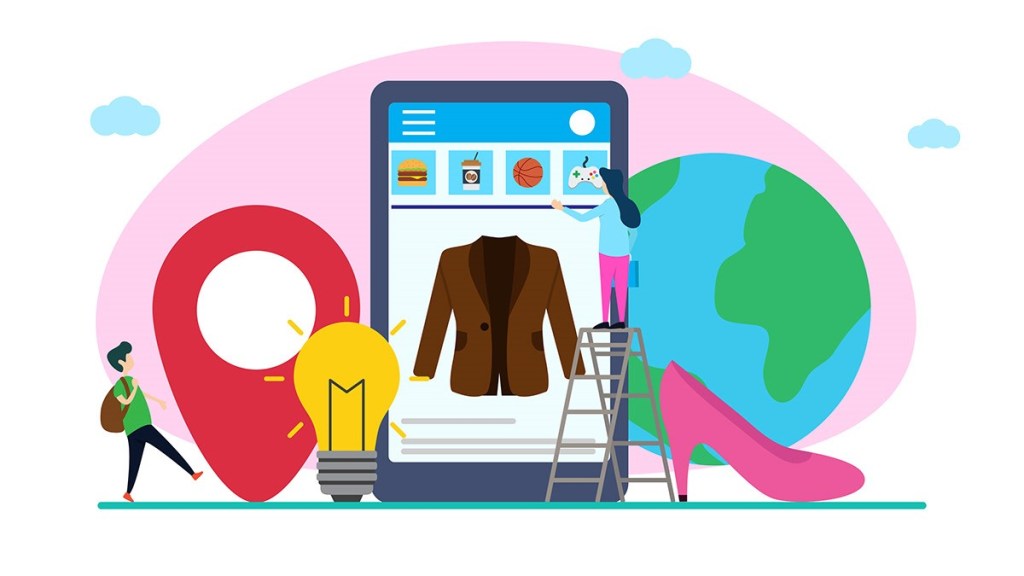
“Online Shopping Flat Illustration” by rizalul ammar is licensed under CC BY-NC-ND 4.0 

Social shopping model

Social shopping combines social media with online shops to enable consumers to communicate, shopping, participate and interact online. Social shopping uses social media to bring traditional products, services, sales and consumer engagement online, building connections between social media, brands and consumers (Kim, et.al, 2014). In response to this new social shopping model, merchants have launched a new marketing model for social media marketing.
“Online Shopping Flat Illustration” by rizalul ammar is licensed under CC BY-NC-ND 4.0 

Social media marketing mode

Using social media for marketing and sales is the future trend, and more and more people will choose to shop online. This is because online shopping gives consumers more choices than traditional offline shopping. Second, social media gives consumers a platform for communication. People can choose to shop through other consumers’ evaluations or friends’ recommendations, and through word-of-mouth marketing, they can choose products faster and better. There will be more shopping social media in the future, making shopping easier. The social shopping model will also change the global supply and marketing channels, especially the impact on the purchasing power of underdeveloped regions and adjacent regions (Kim, et.al, 2014).

The advantages and disadvantages of Online shopping

Online shopping has advantages and disadvantages. On this topic, I interviewed my good friend Celine. She is a shopping enthusiast. She has some insights into online shopping. Let ’s listens to my podcast!

Conclusion

This article is mainly about the connection between social media and online shopping. By analyzing the advantages and disadvantages of online shopping, combined with the characteristics of social media to discuss the future development trend of business, marketing and people shopping patterns. In the future, more and more people will choose to shop online. We hope that with the continuous improvement of social media, the problems arising from online shopping will also be solved.

References

Ammar, R 2019, Online Shopping Flat Illustration, Image, Retrieved 1 September 2019 <https://www.behance.net/gallery/80820457/Online-Shopping-Flat-Illustration&gt;.

Gangai, KN, Tamor, N, Dash, A & Agrawal, R 2018, ‘Role of Social Media: Attracting & Engaging Customers in Online Shopping’, International Journal of Knowledge Management & Practices, vol. 6, no. 1, pp. 5–14, viewed 2 September 2019, <http://search.ebscohost.com/login.aspx?direct=true&db=lls&AN=130077771&site=eds-live&scope=site&gt;.

Kim, H, Kim, J & Huang, R 2014, ‘Social capital in the Chinese virtual community: impacts on the social shopping model for social media’, Global Economic Review: Perspectives on East Asian Economies and Industries, vol. 43, no. 1, pp. 3–24, retrieved 1 September 2019, <http://search.ebscohost.com/login.aspx?direct=true&db=bas&AN=BAS846390&site=eds-live&scope=site&gt;.

Zhang, Y, Trusov, M, Stephen, AT & Jamal, Z 2017, ‘Online Shopping and Social Media: Friends or Foes?’, Journal of Marketing, vol. 81, no. 6, pp. 24–41, retrieved 1 September 2019, <http://search.ebscohost.com/login.aspx?direct=true&db=bth&AN=126087332&authtype=sso&custid=deakin&site=eds-live&scope=site&gt;.

Podcast

Sound comes from Victor and Celine

Featured music:

Corporate Ukulele (CREATIVE COMMONS) – Royalty Free Music | Happy Positive Business by Royalty Free Music (CC BY-SA 3.0)

Cover image design by Victor

Connect with me online!!

Twitter:twitter.com/Victor_WangZ
WordPress:victor.art.blog/
Online Exercise : Vlog about My Story

Vlog content and ideas

This is a short video of a personal introduction. This video mainly introduces my major, hobbies and my vision for the future. I want to use this short video to let the audience know my major and hobbies and the reasons for my preferences. This video is mainly intended to be shared with students who have the same major or the same interests. Therefore, I set the tag when I uploaded the video to YouTube in order to make it easier for people to search for keywords or to be easily pushed to the target audience by YouTube. My video is mainly in the form of a speech, without too many special effects and shots. The audience can be focused on listening to what I have said. In order to make the video more authentic and intimate, I appear in the video from the beginning to the end. I hope that this monologue will resonate with the audience and hope that this video will attract people with the same interests to be friends.

Vlog production strategy

I did a lot of preparation before shooting this video. I listed the outline for this monologue. The goal is to make the monologue of the entire video more logical. I have done a lot of thinking and choosing when I chose the location to shoot my video. I want to choose the location to be quiet and I can speak loudly. I originally chose to record at school, but the external environment factor made me give up this choice because the school did not have a suitable place to record. I chose to record this video in my bedroom because the bedroom is quiet enough to keep the recorded video from being disturbed by noise. I inserted a song at the beginning and end of the video to activate the atmosphere of the video. Make the video look a little more interesting than to feel awkward and boring. The content of the video is mainly divided into three parts, Major, hobby, and expectations. The speech is divided into an introductory section, a content section, and a final ending as a framework, making the entire video sound more organized. In order to make the video more realistic and coherent, in the case of only one lens, the simultaneous sound is selected when recording the audio. This means that video recording and audio recording are performed simultaneously. This guarantees the quality of the video and audio. Some text descriptions have been inserted into the video to better explain some of the information other than audio. Originally planned to subtitle the video, but did not complete this idea due to time.

Challenge and solution

I encountered a lot of problems when making vlogs. When making a vlog, any resources used must be authorized or use some Creative common resources. I use Creative Common to find music that I can use when I am looking for a soundtrack. It is a challenge for a beginner to indicate the source of music in the work when inserting music. I encountered a lot of problems when making vlogs. When making a vlog, any resources used must be authorized or use some Creative common resources. I use Creative Common to find music that I can use when I am looking for a soundtrack. Through study, I learned how to use some creative common resources to help us better complete our vlog. In addition, I have encountered some trouble. The video I made with my mobile phone is not in .MP4 format. I solved the problem of the video output format by using the software for format conversion. During the uploading of the video, the uploading of the transcoding is slow due to the excessive resolution of the video. The video is not very clear after the video below 360p is opened. Please adjust the image quality to 360p or above automatically when watching the video.

I am very happy to share my process of making this vlog here. I hope everyone can love my volg. If you want to know more about me, please follow me on YouTube and Twitter.

Video Credits

A short Video to introduce Victor’s learning and hobbies.

Video Camera: Victor

Video Maker: Victor

Music: Ho Hey By Steve Jackson (CC BY-SA 3.0)

Connect with me online!!!

Twitter:twitter.com/Victor_WangZ

WordPress:victor.art.blog/

Digital Media and Gamification

Introduction

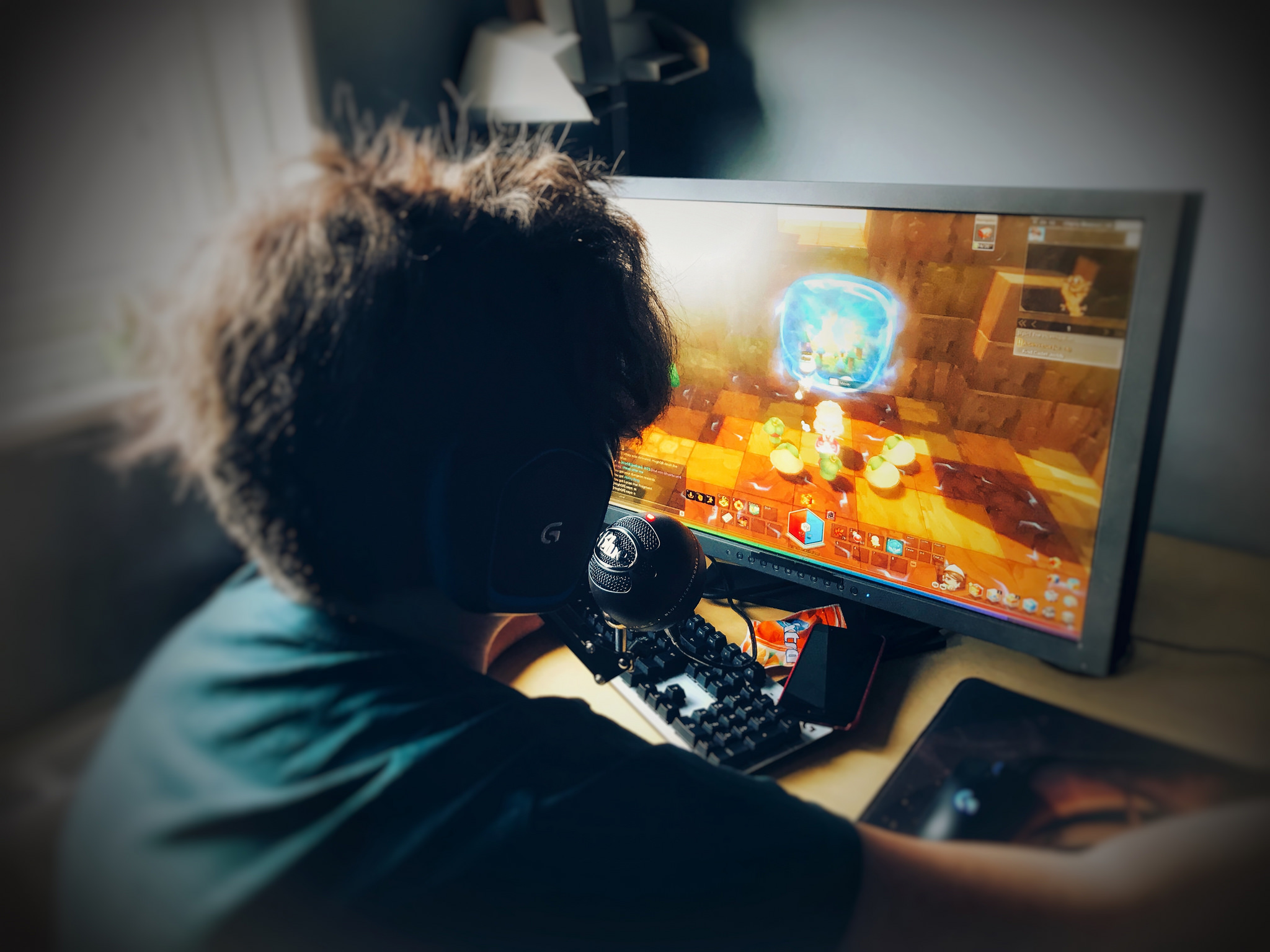
Games are very common in life. Everyone loves to play games, especially children. Games are closely related to education, life and entertainment. Games are everywhere in life, and no one can deny the appeal of the game. This video was taken by me and my team members. Showing the theme of my blog with a 25 second video. This blog is mainly about how digital media and gamification and gamification can improve or influence motivation and engagement.

Gamer by ulricaloeb (CC BY 2.0)

What is Gamification?

Games are a way of behavior that no one can refuse. The game stimulates some positive emotions of human beings, such as concentration, participation and sense of accomplishment. People become more engaged and productive in the game. Games can motivate individuals (Subhash & Cudney 2018) The purpose of gamification is to increase people’s enthusiasm and participation. Gamification can also be defined as the use of game design elements in non-gaming environments. Usually gamification is often used in education and marketing. Gaming applied to marketing and business environments to increase customer purchasing power. Its purpose is to attract more people and influence the consumer’s consumption behavior.

Gamification on Education

Gamification learning has been shown to improve student achievement and engagement and help them build more social connections than traditional course settings (Cheng-Chia et al.2018). Gamification is often used in the field of education. With the popularity of digital media, multimedia and online learning are widely used in education. The purpose of gamification is to attract students’ attention and interest in learning, thereby enhancing student participation and enthusiasm. In combination with the game and teaching, in order to increase the interest of the course, the teacher designed some small games related to the course to assist the teaching. Like Kahoot! Quizlet, Moodle Quiz, Educational Games, etc. These games make the course more interesting. It can also increase students’ interest in learning. Usually, these educational games will set up standings or leaderboards, encourage students to actively participate, and learn to get higher points or rankings. In addition, badge collection, points, feedback, and levels are the most commonly used game elements in game learning. According to research, the use of gamification learning can improve student engagement, motivation, confidence, attitude, perceived learning and performance(Van & Zaman 2018). A gamified educational model is easily accepted by students and increases student participation. In addition, research shows that gamification education is easier for students to acquire knowledge and enhance knowledge memory than traditional education. Gamification learning can promote students’ self-learning and help students improve their academic performance and participation. Gamification education can improve students’ motivation and engagement. In the future, more and more educational games appear in education.More online learning platforms use learning games to allow more students to learn on their own.


Coles tienda by erostrend(CC BY-SA 2.0)

Gamification on Business

Many companies apply gamification to employee training and employee performance appraisal. Employees’ enthusiasm is mobilized through punching, points, leaderboards or standings, allowing employees to actively learn and work. This enable the company to develop sustainably. This is a very good way to train employees. Employee loyalty is guaranteed through the ranking of points and game competition between employees. In addition, companies have applied gamification to sales and marketing. For example, Coles Supermarket launched a little shop promotion. It is stipulated that customers who purchase more than $30 will be exchanged for a product model with a shopping receipt. The product model is randomly distributed, and when all the product models are collected, the prize can be exchanged. The “Little Shop” collection includes miniature plastic replicas of Vegemite, Nutella, toothpaste, diapers and more. So, some fanatic collectors have joined the ranks of shopping. This has inspired people’s shopping needs. More and more people are increasing the number of shopping and the price of each purchase in order to get the Little Shop collection. This activity not only adds to the fun, but also promotes the purchasing power and desire of customers. In addition, some retailers also use electronic loyalty cards to exchange gifts or VIP member discount to promote customer spending. Even some companies use Augmented Reality technology to achieve gamification and customer interaction. Alibaba’s Alipay launched a campaign to scan the word “福”(Fu) in Chinese New Year. The word “福” (Fu) is a symbol of traditional Chinese festivals.Collect the “Fu” card by scanning the word “福” (Fu) and finally exchange the red envelope. This is interesting because the red envelopes are randomly assigned by the system. In order to increase the fun of the event and popularize financial knowledge, you can also get the “Fu” card by answering the questionnaire. The more you answer the correct question, the higher the score you get. In the end, you can draw a other prize in addition to the “Fu” card. Through this activity, more people are using Alipay this app. Gamification can attract more customers and increase customer loyalty and enthusiasm.

Gamification is not only a tool for learning work, it is also an important way to improve learning enthusiasm and participation. Gamification can also enable people to promote communication and competition. In the future, gamification will be applied in a variety of other fields.

References

Cheng-Chia (Brian) Chen1, ChingChih (Kathy) Huang1, Gribbins, M & Swan, K 2018, ‘Gamify Online Courses With Tools Built Into Your Learning Management System (LMS) to Enhance Self-Determined and Active Learning’, Online Learning, vol. 22, no. 3, pp. 41–54, retrieved 3 February 2019, <http://ezproxy.deakin.edu.au/login?url=http://search.ebscohost.com/login.aspx?direct=true&db=eue&AN=133022971&authtype=sso&custid=deakin&site=eds-live&scope=site&gt;.

Subhash, S & Cudney, EA 2018., ‘Gamified learning in higher education: A systematic review of the literature’, Computers in Human Behavior, vol. 87, pp. 192–206, retrieved 3 February 2019, <http://ezproxy.deakin.edu.au/login?url=http://search.ebscohost.com/login.aspx?direct=true&db=edselc&AN=edselc.2-52.0-85049310341&authtype=sso&custid=deakin&site=eds-live&scope=site&gt;.

van Roy, R & Zaman, B 2018., ‘Need-supporting gamification in education: An assessment of motivational effects over time’, COMPUTERS & EDUCATION, vol. 127, pp. 283–297, retrieved 3 February 2019, <http://ezproxy.deakin.edu.au/login?url=http://search.ebscohost.com/login.aspx?direct=true&db=edswsc&AN=000448635800020&authtype=sso&custid=deakin&site=eds-live&scope=site&gt;.

Video Credits

A short Video to illustrate How does the gamification to enhance user motivation and engagement.

Video Camera: Victor

Video Maker: Victor

Music : Ho Hey By Steve Jackson (CC BY-SA 3.0)

References list

Cheng-Chia (Brian) Chen1, ChingChih (Kathy) Huang1, Gribbins, M & Swan, K 2018, ‘Gamify Online Courses With Tools Built Into Your Learning Management System (LMS) to Enhance Self-Determined and Active Learning’, Online Learning, vol. 22, no. 3, pp. 41–54, retrieved 3 February 2019, <http://ezproxy.deakin.edu.au/login?url=http://search.ebscohost.com/login.aspx?direct=true&db=eue&AN=133022971&authtype=sso&custid=deakin&site=eds-live&scope=site&gt;.

Subhash, S & Cudney, EA 2018, ‘Gamified learning in higher education: A systematic review of the literature’, Computers in Human Behavior, vol. 87, pp. 192–206, retrieved 3 February 2019, <http://ezproxy.deakin.edu.au/login?url=http://search.ebscohost.com/login.aspx?direct=true&db=edselc&AN=edselc.2-52.0-85049310341&authtype=sso&custid=deakin&site=eds-live&scope=site&gt;.

Share my first podcast-Digital Media and Education

After 10 weeks of learning, through the mission requirements and Adam’s podcasts and blog examples, I learned how to make a podcast. Because my first language is not English, there are some minor problems with language expression, such as speaking and grammar. But through my more times exercise, I tried to overcome these problems. During the recording process, I was very nervous, so I divided the content into three times, and finally used the editing software to put the sound together.

I chose digital media and education as my podcast topic.I am very interested in the application of digital media in education. I found the information through the Deakin library.I quickly found the corresponding journal article through keyword search. My podcast is divided into three parts. The first part introduces the background and leads to what I want to discuss. Background I have shown through Kaplan and Haenlein(2010) that 75% of web users use digital media to connect. By way of example, the impact of digital media on people is demonstrated. Next, the benefits of digital media for education are illustrated by specific examples. Hopkins (2017) believes that digital media can make it easier for people to access knowledge, and it is easier to connect with experts in the field through social media.The second example is to prove that digital media makes education more convenient through Moodle. Finally, a set of data from BBC News shows that digital media can allow more students to focus on learning. The final part is to summarize the views of the entire podcast.I have referenced four resource for all the content, which fully expresses my point of view. Digital media is good for education.This is the process of preparing my podcast content. I first look for the information, then list the ideas and examples, and finally make sentences.

The next step is to record audio and clip audio. Because my first language is not English. I was nervous before recording, and I was afraid that the pronunciation of the words was not accurate. I confirmed the correct pronunciation by reading the dictionary that I could not read, and practiced it many times. I started recording. I chose to use the recording function of my mobile phone and it was in a quiet room. Because the format of the iphone mobile phone recording output is .M4a. So I converted the format to MP3 via software and used my editing software to combine my best recordings with background music. Featured music I chose to use free music licensed by Creative commons. In the previous blog, I mistakenly used images without Creative Commons. I thought that a C logo is a picture that Creative Commons certification can use. So I specifically studied the contents of the Creative Commons website and DeakinCould. This time I used Creative Commons correctly. I also designed a beautiful cover for my podcast.

Through this production of podcasts, I learned how to fully express my views in five minutes, how to edit sounds with audio editing software, and how to use Creative Commons certified pictures and music. I also learned how to embed podcasts in my blog. I think my podcast has been very successful and it is a very good experience.

References list
Barge, P & Londhe, BR 2014, ‘From teaching, learning to assessment: Moodle experience at B’School in India’, Procedia Economics and Finance, Vol. 11, 2014, pp. 857-865, retrieved 8 April 2018, Science Direct database.

BBC 2010, How social media is changing education, BBC, retrieved 8 April 2018, < www.bbcactive.com/BBCActiveIdeasan…ngeducation.aspx>.

Hopkins, B 2017, Impact of Social Media on Education, Academia Apps, retrieved 8 April 2018, < www.academiaapps.com/impact-social-…dia-education/>.

Kaplan, A, & Haenlein, M 2010, ‘Users of the world, unite! The challenges and opportunities of Social Media’, Business Horizons, 53, 1, p. 59-68, retrieved 8 April 2018, Scopus database.

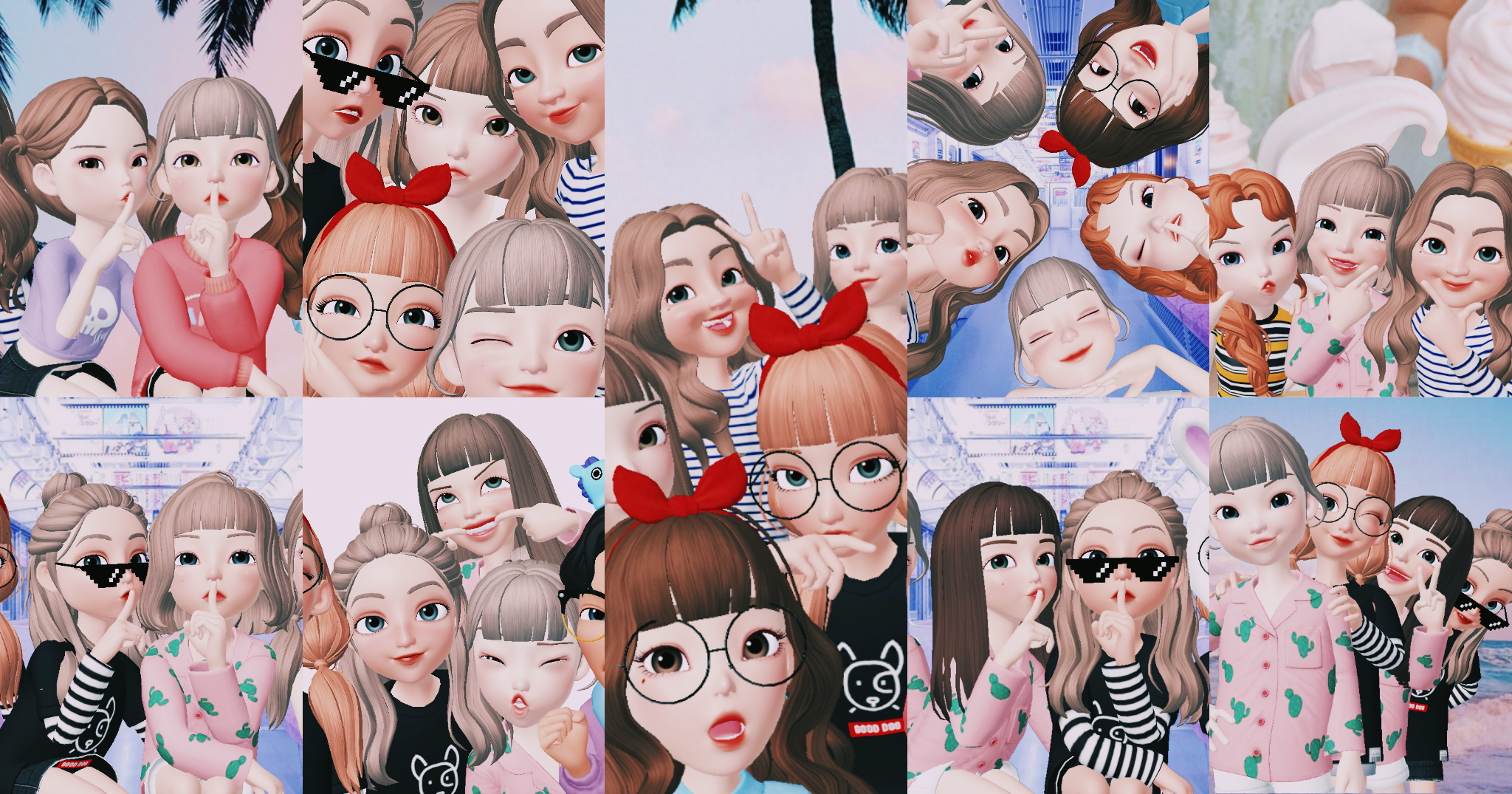
Zepeto—3D avatar creation social media

ZEPETO  by Rosemary Alyndes (CC by 2.0 )

Recently, a Korean 3D avatar creation app has been popular on major social media. This is another technique by South Korea’s Naver Corporation following the Snow Camera app. This app is mainly a combination of 3D characters and online chat. 3D avatars are often used in video games, virtual communities and the fashion industry. Microsoft Kinect’s 3D body avatar creation is one of the first products (Berdic et al. 2017, p.29). The first virtual community game “The Sims” created with 3D avatars. However this is just a stand-alone game. Zepeto allows you to create your own 3D avatar that can be used almost anywhere. In short, Zepeto is an app that allows you to create 3D versions yourself. You can design styles and make your own emoji. It is like the combination of Snapchat’s Bitmoji, Samsung’s AR Emoji and Apple’s Memoji.


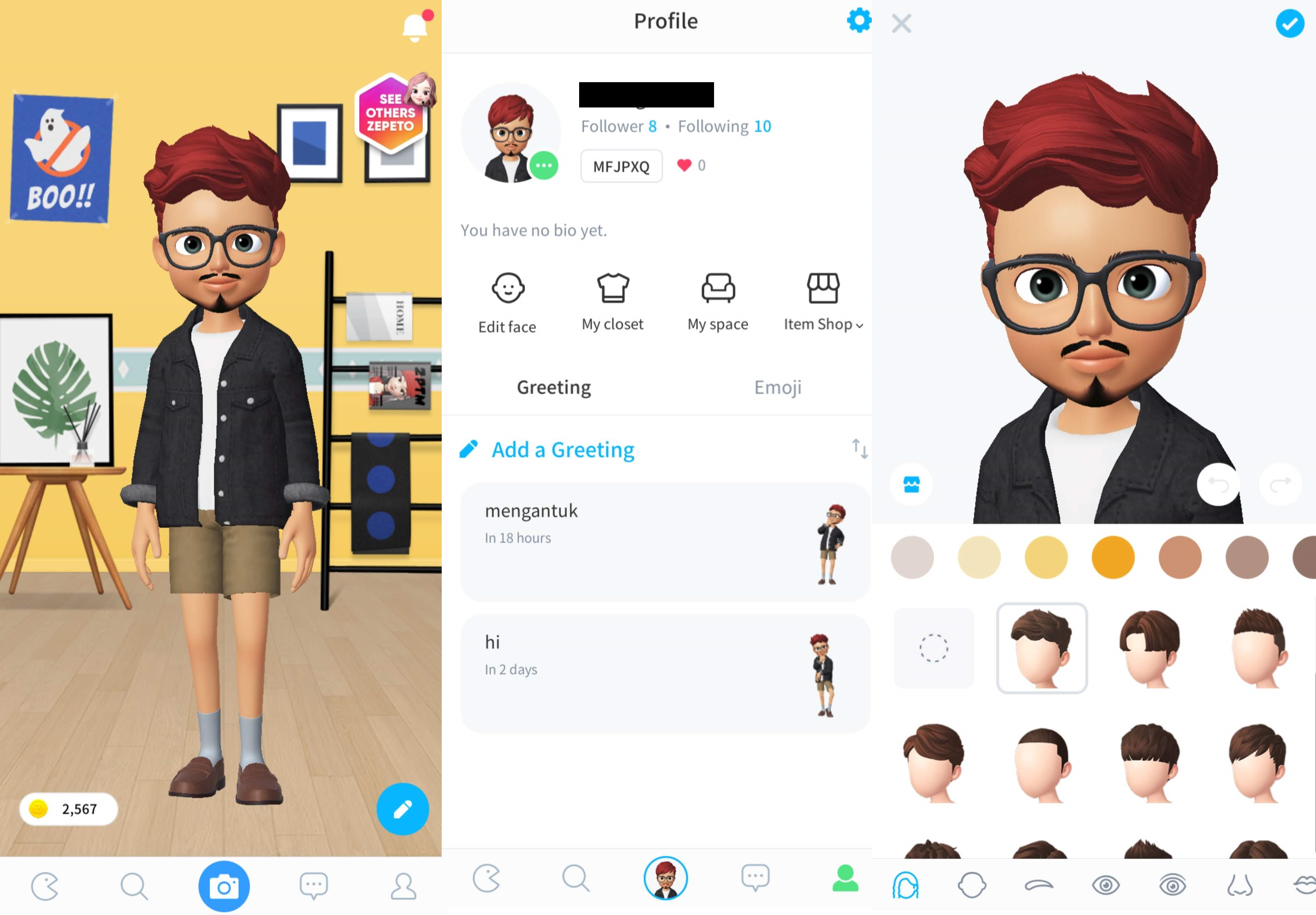
Cara membuat avatar di aplikasi Zepeto.  by Liputan6.com/Jeko I.R. (CC by 2.0 )

How to use ZEPETO

ZEPETO uses portrait capture technology to create faces that look like your own avatar. You can also create models based on your own preferences through data mediation. You can choose your favorite clothes, hair color and skin tone according to your preferences. You can also make up and choose accessories such as glasses and headwear. This belongs to your avatar is made. In addition to designing 3D avatar, you can also design a warm home for your virtual avatar. You can also customize your Zepeto space by adding furniture, plants and artwork to use when friends or other players want to visit. This design is a bit like Tencent’s LIMI Show and QQ Show. QQ show is an avatar application in Chinese social app. It is a feature in the QQ chat app. It can be displayed on social media through a personalized virtual avatar. After designing the avatar and setting up the Zepeto space, you can share it with your friends. You can create photos and make emoticons with your friends’ avatars. You can also chat with your friends. 

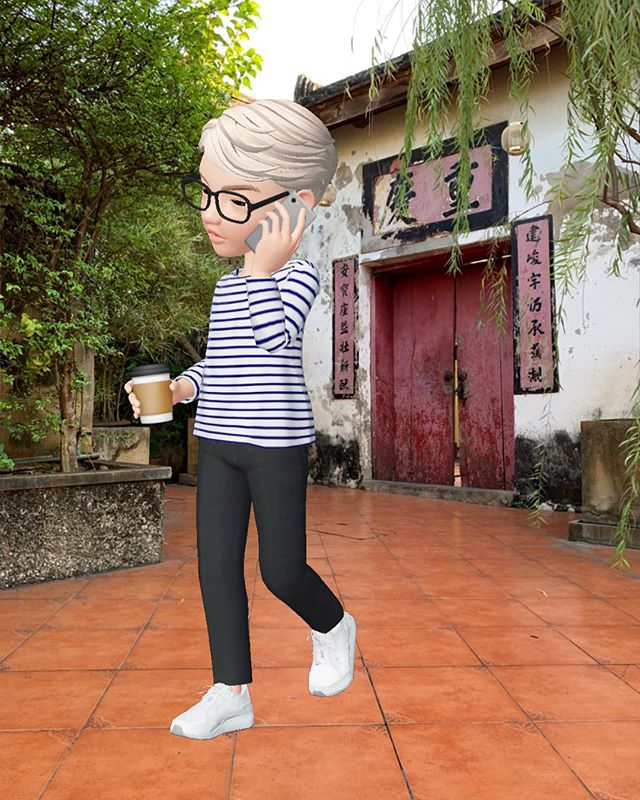
อ๋อ อยู่เมืองจีน #zepeto  by Kitti Purkkaewkanjana  (CC by 2.0 )

The app’s personalized design has attracted many young people, and it has become the number one app in terms of downloads almost immediately. Not only can you create photos and emoticons, but you can also share them with friends on WeChat, Instagram, Facebook, twitter, and almost all social media. This app seamlessly interfaces with other social media. This is a good way to help communicate, perhaps the most popular way of communication this year.

Of course, this app is not boring, you can buy your favorite clothes and accessories by using gold coins, and you can unlock new actions by completing tasks. So how do you earn gold coins? You can earn gold coins through daily tasks and taking photos. Logging in the system every day will also send some gold coins. There are three “daily tasks”, two of which only need to wait 5 minutes and 10 minutes to get gold coins. The other one needs to watch AD to get it. Ads are usually 30-second promotional ads. This is why this app does not require customers to spend money on operations. The app maintains normal operations by placing ads. But users can still get coins quickly by top up money to unlock more clothes, expressions and movements. In addition to these ways of getting coins, users can also get it through the game “Flying Ghost”, which is based on “Flappy Bird”.

Like other social media app, Zepeto has a six-digit code for each user. They are made up of letters and numbers.  This is proof of identity on this app. Users can add friends with real-life friends through this code. In addition to this, there is also a feature called “Photo Booth”, which is the main reason you see Zepeto on social media. It allows you to take photos of 3D characters yourself or with a group of friends. You can even customize it by adding a realistic background. If you want to meet people online, you can head to the “Zepeto City street” and meet other “Zepetos”.

This app was just launched in December this year, and many features are still being developed. I hope it can lead the trend of social media and make this platform better. Download this app quickly, add me as a friend, let’s make an emoticon! Code : 5R4V6A

Reference list

 BERDIC,N, DRAGAN, D, MIHIC, S & ANISIC, Z 2017, ‘Creation and Usage of 3D FullBody Avatars’, Annals of the Faculty of Engineering Hunedoara – InternationalJournal of Engineering, vol. 15, no. 1, pp. 29–34, retrieved 10 December 2018,<http://ezproxy.deakin.edu.au/login?url=http://search.ebscohost.com/login.aspx?direct=true&db=a9h&AN=121771746&site=eds-live&scope=site&gt;.

Design a site like this with WordPress.com
Get started